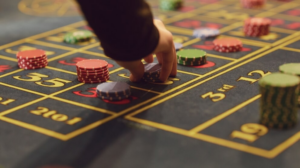

Understanding Possibility and Probability
A possible outcome is one that can happen. A likely outcome is one that has a comparatively high probability of occurring. These ideas are related, but they are not interchangeable.
In gambling, the difference can be easy to overlook because games often highlight large prizes or exciting winning moments. Seeing that a major payout is possible does not reveal how frequently it occurs. To understand the risk, players need to consider the probability of the outcome, not simply whether it can happen.
For example, a prize may be available in a game even if the chance of receiving it on any individual play is very small. The existence of that prize does not mean a player should expect to win it. Check this out!
How Probability Changes Expectations
Probability expresses the chance of an outcome under defined conditions. It may be represented as a fraction, percentage, or ratio. If an event has a probability of 1 in 100, its chance is 1% for each trial when the stated conditions apply.
This does not mean the event must occur once in every 100 attempts. It could happen on the first attempt, several times in a short sequence, or not at all during 100 attempts. Probability describes the chance of an outcome, not a guaranteed schedule.
Consider a person who buys a ticket in a draw with a small chance of winning the main prize. The prize is real, but the probability may still be low. Focusing only on the potential reward can lead someone to underestimate how unlikely the outcome is.
Why Previous Results Can Be Misleading
People often search for patterns in random results. After several losses, someone may feel that a win is overdue. After several wins, another person may believe that the same pattern will continue.
For independent events, previous results do not change the probability of the next event. For example, if a fair coin is flipped, the chance of heads remains 50% on each flip, regardless of the results that came before it.
However, not every gambling situation follows the same probability model. Some games involve dependent events, changing conditions, or rules that affect the available outcomes. Understanding the specific game is therefore important. A general belief that a result is due cannot replace the actual mathematics.
The House Edge and Expected Outcomes
Many gambling games are designed with a mathematical advantage for the operator. This is known as the house edge. It represents the theoretical long-term advantage built into the game’s rules.
A player might win an individual round even when playing a game with a house edge. The important distinction is that a short-term win does not remove the underlying mathematical advantage. Over a large number of wagers, that advantage affects expected results.
This is why a possible payout should not be confused with a dependable financial opportunity. No strategy can guarantee a win in a game governed by chance.
Making More Informed Decisions
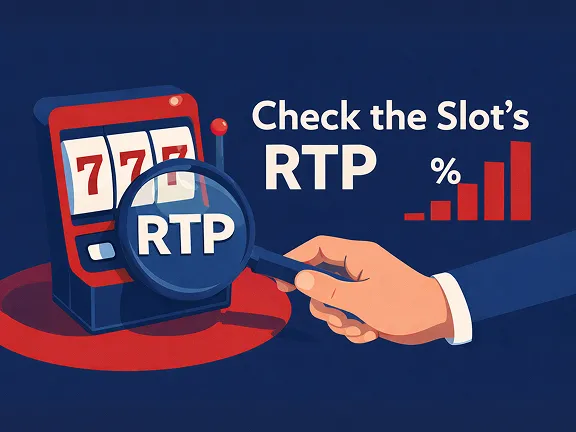
When evaluating a gambling game, look for clearly stated odds, payout rules, and relevant probability information. Be cautious of promotional messages that emphasize prizes without explaining their likelihood.
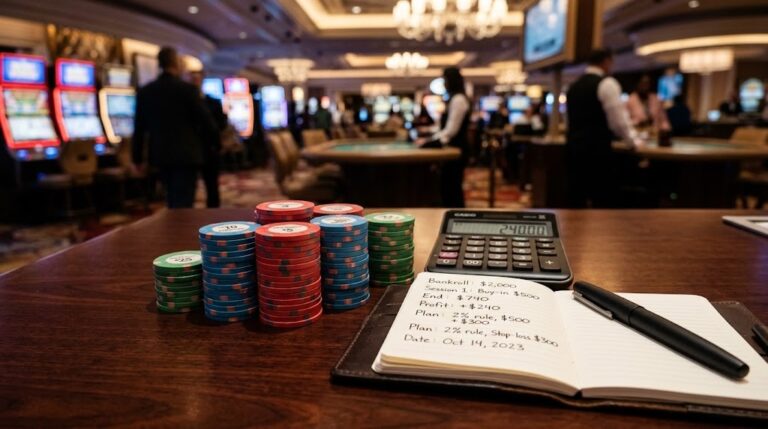
It is also sensible to decide in advance how much money and time can be spent, without relying on future winnings to cover bills or recover losses. Probability helps explain uncertainty, but it cannot predict every individual result.
Recognizing the difference between possibility and likelihood encourages more realistic expectations. A win may be possible, but that alone is not a reason to assume it is probable or financially dependable.